
Salt air changes what South Carolina code allows on a deck. Here is what Grand Strand homeowners should check before signing a deck proposal.
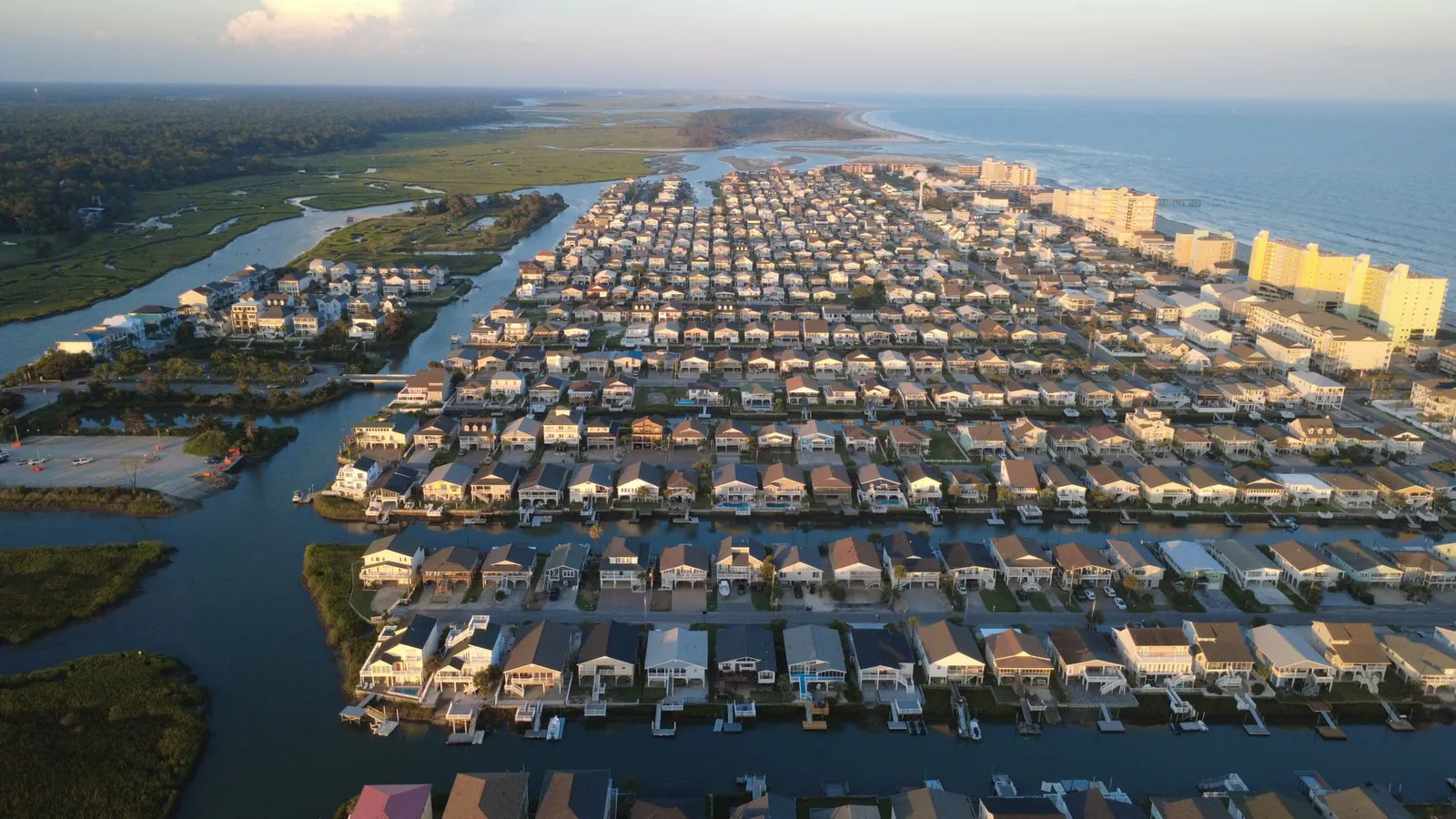
Before building a custom deck on the Grand Strand, the coastal strip of northeastern South Carolina that includes Myrtle Beach, two technical questions decide the job: how close the lot sits to salt water, and whether the deck qualifies for the narrow permit exemption. The South Carolina Residential Code (2021) answers both: Section R507.2.3 requires stainless steel fasteners and connectors within 300 feet of a salt water shoreline, and Section R105.2 exempts a deck from a building permit only when four conditions are true at once. Settle those two first and the rest of the decisions (material, color, framing layout, stair placement) get much easier to judge.
South Carolina has been operating under the 2021 code set since January 1, 2023, an effective date published by the City of Charleston Fire Marshal’s Office, which lists the 2021 South Carolina Residential Code among the adopted codes. That code is the reference point for everything below.
Before building a custom deck on the Grand Strand, the coastal strip of northeastern South Carolina that includes Myrtle Beach, two technical questions decide the job: how close the lot sits to salt water, and whether the deck qualifies for the narrow permit exemption.
How does the coastal climate on the Grand Strand change a deck build?
Three forces work on a Grand Strand deck at the same time, and each one changes a build decision:
- Salt attacks the metal.
- UV weathers the wood.
- Humidity punishes framing that cannot drain.
Simpson Strong-Tie, which manufactures the structural connectors that hold deck framing together, lists ocean salt air as a corrosive factor to weigh when selecting hardware, and states plainly that it is common to see some corrosion in outdoor applications and that even stainless steel can corrode. When a connector manufacturer says that, hardware selection stops being a line item and becomes an engineering decision.
Sun matters just as much. Viance, which develops the preservatives used in pressure-treated lumber, explains that treatment protects wood against fungal decay and termites but does not stop weathering: as wood dries and reacts to ultraviolet rays, the green color fades. Treated does not mean finished, and it does not mean maintenance free.
Humidity is the quiet one. Trex, a composite decking manufacturer, states that its boards are built with a durable capped surface and an uncapped underside engineered for airflow and drainage, and that the company does not recommend installing boards on a solid surface, because a solid surface does not allow for proper drainage and airflow. If a proposal shows deck boards laid straight over an existing slab, ask how water and air are supposed to move under them.
When does South Carolina code require stainless steel deck hardware?
The South Carolina Residential Code (2021), Section R507.2.3, requires that fasteners and connectors exposed to salt water, or located within 300 feet of a salt water shoreline, be stainless steel. The same section points to ASTM F1667 for nails, ASTM A307 for bolts, and ASTM A653 for galvanized steel connectors.
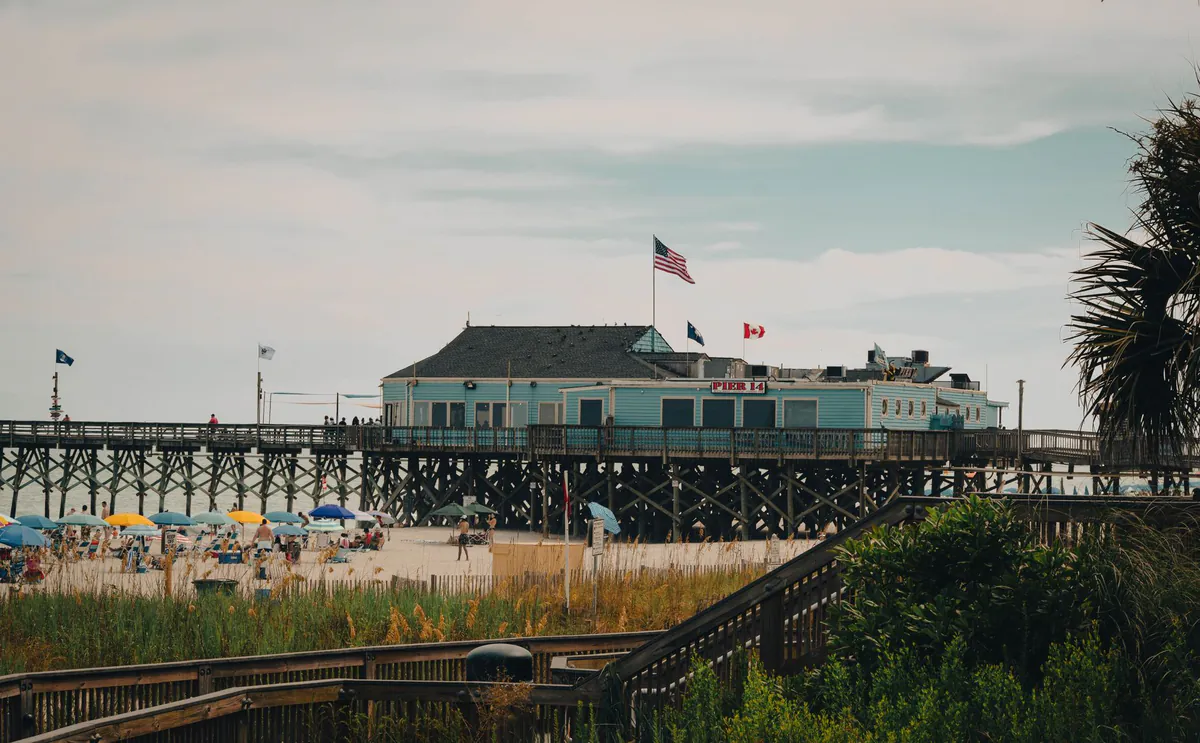
Read the distance again: 300 feet from a salt water shoreline. That covers a large share of the housing stock in Myrtle Beach, North Myrtle Beach, Surfside Beach and Murrells Inlet, including plenty of homes that sit behind the front row on tidal water rather than on the ocean itself. Longer distances appear in coastal deck articles written for other states, and they come from other standards. They are not the South Carolina rule.
For a reader of proposals, that means one thing. If your address is anywhere near salt water, the written scope should name the fastener and connector metal, not just say “code compliant hardware.” One caution on sourcing: the version of the code text used here comes from a code reproduction service rather than from the adopting authority, so confirm the current wording and how the 300 foot line is applied at your specific address with your local building department before you sign anything.
Pressure-treated wood or capped composite in a humid climate?
Neither material is disqualified on the coast: the code sets a floor under both and leaves the choice to you. The South Carolina Residential Code (2021), Section R507.2, requires that deck lumber be No. 2 grade or better and either preservative treated or naturally durable and protected against termites, and that plastic composite decking comply with ASTM D7032, the material standard the code names for plastic composite decking, including resistance to decay and termites where required. The structure also has to be designed for the live load in Section R301.5 or the ground snow load in Table R301.2, whichever is greater.
Above that floor, this is a tradeoff, not a contest. The right answer depends on how much annual upkeep you actually want to do and how the deck will be used barefoot in July.
Start with the treatment level, because it is the cheapest thing in the world to specify and the easiest thing to leave vague. Viance sorts pressure treatment into Use Categories, the labels that state where a treated board is rated to be used:
- UC3B, above ground: joists, supporting beams, decking, railings and fence rails, where the wood does not touch the ground or sits six inches or more above it.
- UC4A, ground contact: posts and any application where soil, debris or vegetation can pile up against the wood.
Those two labels are the difference between a post that holds and a post that fails early.
| What you are comparing | Pressure-treated wood | Capped composite |
|---|---|---|
| Code requirement | No. 2 grade or better, treated or naturally durable (SC Residential Code 2021, R507.2) | Must comply with ASTM D7032 (SC Residential Code 2021, R507.2) |
| Question to ask the builder | Which Use Category is specified, UC3B or UC4A, for posts and for joists? | Does the product line carry documented ASTM D7032 compliance? |
| Sealing and finishing | YellaWood, a pressure-treated lumber manufacturer, recommends applying a water repellent within six weeks of completion and reapplying annually | Trex states its decking never needs staining or painting |
| Routine cleaning | Cleaning plus refinishing on the product manufacturer’s schedule | Trex calls for occasional cleaning with soap and water or a pressure washer |
| Surface heat in direct sun | Trex names wood decking among the surfaces comparable in heat to its own boards | Trex states boards get hot in direct sun and that dark colors get hotter |
| Weathering and color | Viance notes treatment resists fungal decay and termites, not UV; the green tone fades | Ask for the manufacturer’s current documentation for the specific line you are quoted |
| Underside detail | Framing must be able to drain and breathe | Uncapped underside engineered for airflow and drainage, per Trex; not for solid surfaces |
The maintenance column is where “zero maintenance” marketing falls apart on both sides. YellaWood tells owners to apply a water repellent within six weeks of completion and to reapply it annually, to pick a sealant with UV stabilizers and water repellents, and to use a simple sprinkle test first: splash water on a board, and if it beads, wait longer before sealing; if it soaks in, the board is ready. Composite is not free either. Trex says its decking never needs staining or painting, but still asks for occasional cleaning with soap and water or a pressure washer.
Whichever material you choose, keep an inspection habit. The North American Deck and Railing Association (NADRA), which publishes deck safety guidance for the industry, counts more than 60 million decks in the United States and estimates that roughly 30 million of them are past their useful life, and it pushes annual inspection because deterioration from water, climate factors and corrosion is gradual rather than sudden.
When is a deck exempt from a building permit in South Carolina?
Almost certainly your deck is not exempt, because the exemption is narrow. Under the South Carolina Residential Code (2021), Section R105.2, a deck is exempt from a building permit only when all four of these conditions are true at the same time:
- It does not exceed 200 square feet in area.
- It is not more than 30 inches above grade at any point.
- It is not attached to the dwelling.
- It does not serve the exit door required by Section R311.4.
Fail any one of those and the exemption is gone. In practice that describes almost every real custom deck: fastened to the house at a ledger, the board that ties the deck frame to the house wall, raised above grade for drainage and views, and serving the door people actually walk through. Plan on a permit, and treat a builder who waves the question away as a warning sign.
Now the honest part. The state code is the baseline, but requirements and the reviewing authority vary by address inside the Grand Strand. A home in unincorporated Horry County, one inside the Myrtle Beach city limits, and one in North Myrtle Beach, Surfside Beach, Conway or Little River may deal with different departments and different local amendments and zoning steps. Properties close to the beach or to a salt marsh may also be subject to additional state level review, so it is worth confirming that with the SC Department of Environmental Services, Bureau of Coastal Management, as well. Confirm what applies at your address with the local building department before you sign a contract, and ask in writing who is pulling the permit.
What should you check in a deck proposal before you sign?
A deck proposal is short enough that you can audit it yourself. These are the questions that separate a specified scope from a vague one, and the time to ask them is while you are still holding a detailed estimate, before contract signing. Put them to any bid you are weighing for custom deck construction in the Myrtle Beach area.
- Which Use Category is specified? UC3B for above ground framing and decking, UC4A for posts and anything where soil or debris can collect, per Viance. A proposal that just says “treated lumber” has not answered this.
- Does the composite meet ASTM D7032? That is a requirement of the South Carolina Residential Code (2021), Section R507.2, not a brand preference.
- What metal are the fasteners and connectors, and what is the distance to salt water? Inside 300 feet of a salt water shoreline, the South Carolina Residential Code (2021), Section R507.2.3, calls for stainless steel.
- Are the metals compatible with each other? Simpson Strong-Tie recommends using fasteners, anchors and connectors with similar electrochemical properties, and using insulating materials to separate dissimilar metals. A galvanized connector with a stainless screw driven through it at the same joint is a defect you can see from the yard.
- Is the hardware right for the preservative? The Western Wood Preservers Institute (WWPI), which publishes guidance on fasteners for preserved wood, recommends hot-dipped galvanized fasteners for use with all preservatives, including ammonia based ones such as ACQ and ACZA, and lists hot-dipped zinc-coated galvanized steel, stainless steel, silicon bronze and copper as the options accepted in contact with preserved wood. It also notes that stainless steel is considered the highest quality and costs more than comparable hot-dipped galvanized products.
One more check sits outside the technical scope. In South Carolina, a residential builder is defined in the SC Code of Laws, Title 40, Chapter 59, Section 40-59-20(6), as someone who constructs or superintends construction, repair or improvement of a residential structure when the cost of the undertaking exceeds five thousand dollars. Section 40-59-30(A) makes doing that work without a current license or registration a misdemeanor, with fines and possible jail time on conviction. That is a legal threshold, not a price, and it gives you a concrete reason to ask for credentials and verify them yourself. Our post on why hiring a licensed general contractor matters covers what to look at beyond the deck itself.
What drives the schedule on a custom deck build?
Five variables move a deck schedule on the Grand Strand:
- Permit review by whichever authority covers your address.
- Engineering, when the deck is elevated or carries unusual loads.
- Possible additional coastal review on beachfront or marsh-front lots.
- Material availability for the specific decking line you selected.
- The inspection sequence, since framing has to be seen before it is covered.
None of the five are settled before the design is fixed and the permit path is known, so treat a calendar offered earlier than that as a guess.
Sequencing with other work also matters. If the deck is going in alongside siding work or as part of a home addition, the order of trades changes the plan, and it is cheaper to decide that on paper than on site. Our published process runs through six stages: Initial Consultation, Detailed Estimate, Contract Signing, Pre-Construction Meeting, Execution and Final Walkthrough. Ask where sequencing gets settled, and get that answer before execution starts. You can see the full range in our remodeling services.
Custom deck questions Grand Strand homeowners ask
Do I need stainless steel fasteners on a deck in Myrtle Beach?
If the deck hardware is exposed to salt water or sits within 300 feet of a salt water shoreline, the South Carolina Residential Code (2021), Section R507.2.3, requires stainless steel fasteners and connectors. Outside that distance, other metals accepted for use with preserved wood may apply, including hot-dipped galvanized steel. Because the distance is measured from your specific lot, confirm how it is applied with your local building department before construction starts.
Does a custom deck need a building permit in South Carolina?
Usually yes. The South Carolina Residential Code (2021), Section R105.2, exempts a deck only when it does not exceed 200 square feet, is not more than 30 inches above grade at any point, is not attached to the dwelling, and does not serve the required exit door, and all four have to be true at once. Most custom decks fail at least one condition. The reviewing authority and any local amendments vary by address across the Grand Strand, so verify with the building department that covers you.
Is composite decking really maintenance free in a humid coastal climate?
No, though it is lower effort than wood. Trex states that its decking never needs staining or painting but does need occasional cleaning with soap and water or a pressure washer. Trex also notes that boards get hot in direct sun and that dark colors get hotter, which is worth weighing if people will walk on the deck barefoot. By comparison, YellaWood recommends sealing pressure-treated wood within six weeks of completion and reapplying annually.
What should I ask before I sign a deck contract?
Ask which Use Category is specified for posts and joists, whether the composite carries ASTM D7032 compliance, what metal the fasteners and connectors are and how far the deck sits from salt water, and whether all the metals in contact with each other are compatible, since Simpson Strong-Tie warns against mixing dissimilar metals. Ask who is pulling the permit and which department is reviewing it. Then verify the builder’s residential license, given the five thousand dollar threshold in Title 40, Chapter 59 of the SC Code of Laws. Our custom deck page covers what custom deck work includes in the Myrtle Beach area.
Sources: South Carolina Residential Code 2021, Sections R105.2, R507.2 and R507.2.3 (up.codes reproduction: https://up.codes/viewer/south_carolina/irc-2021/chapter/1/scope-and-administration and https://up.codes/viewer/south_carolina/irc-2021/chapter/5/floors); City of Charleston Fire Marshal’s Office, Notice to Construction Industry (https://www.charleston-sc.gov/1466/Notice-to-Construction-Industry); SC Code of Laws, Title 40, Chapter 59 (https://www.scstatehouse.gov/code/t40c059.php); Viance (https://www.treatedwood.com/accordion/preservatives-and-treatment-faqs); Western Wood Preservers Institute (https://preservedwood.org/how-to/fasteners/); Simpson Strong-Tie (https://www.strongtie.com/solutions/corrosion); YellaWood (https://www.yellawood.com/resources/product-education/sealing-pressure-treated-wood/); Trex (https://www.trex.com/why-trex/faq/ and https://www.trex.com/why-trex/decking-for-docks-marinas/); North American Deck and Railing Association (https://www.nadra.org/deck-safety).
Get a Free Quote
Ready to talk through your roofing project? Get a free quote from Top GM Construction and our team will contact you as soon as possible via email and phone.
Or Give Us a Call At 843-823-3000